Built for Long-Term Containment
When you’re dealing with thousands or even millions of gallons of wastewater, irrigation water or agricultural waste, a liner is doing much more than holding water.
It’s protecting the surrounding soil and groundwater, helping control seepage and keeping a critical part of an operation functioning the way it should.
That makes choosing the right lagoon liner an important decision, whether the project involves a wastewater treatment facility, dairy, ranch, vineyard or other agricultural operation.
At Carson Liners, we’ve spent more than 45 years fabricating custom liners for projects where dependable containment matters. That experience has taught us something important: there isn’t one lagoon liner that makes sense for every application.
The right solution starts with understanding what the lagoon is holding, how the site operates and what the liner will be expected to withstand over time.
What Is a Lagoon Liner?
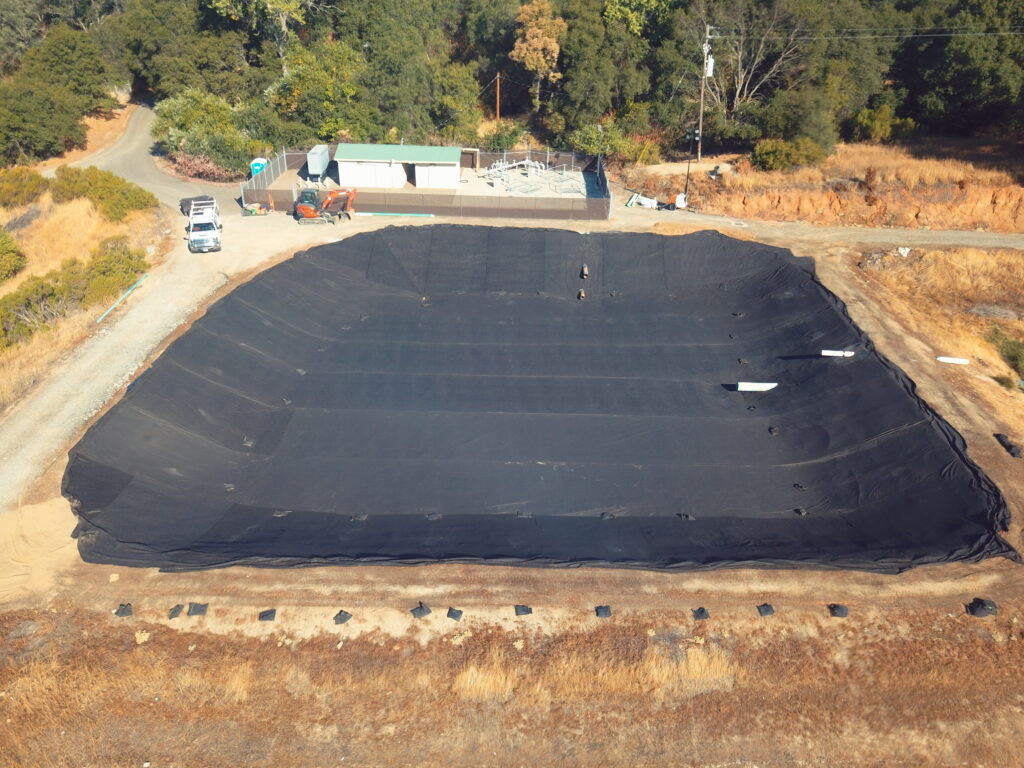
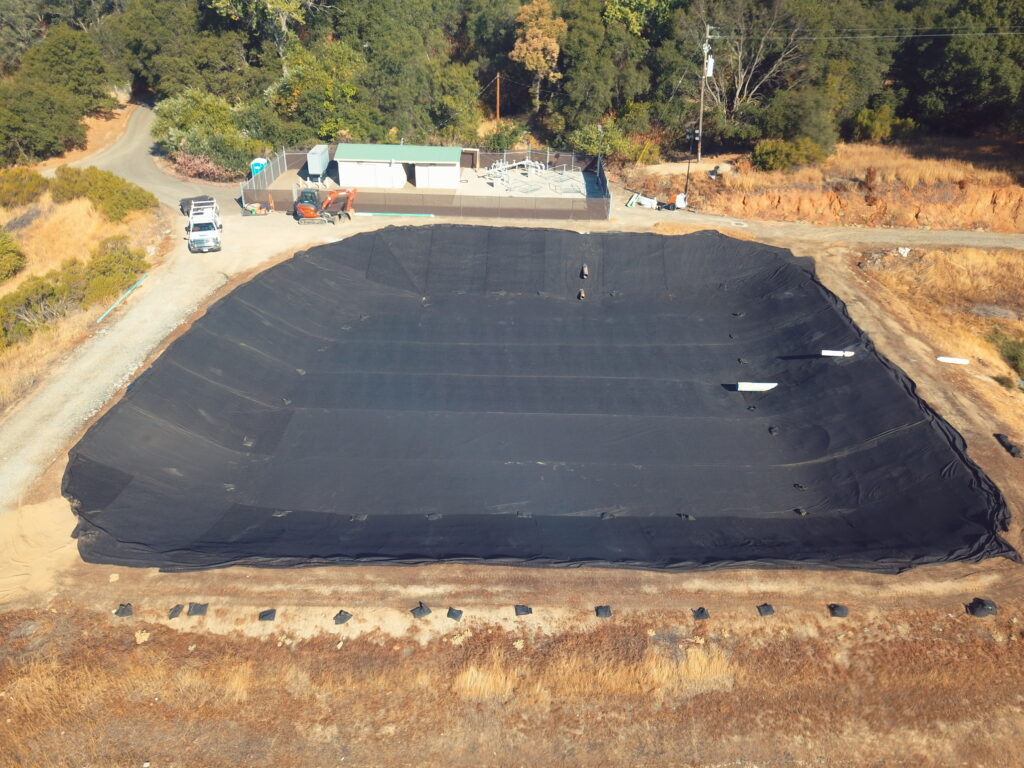
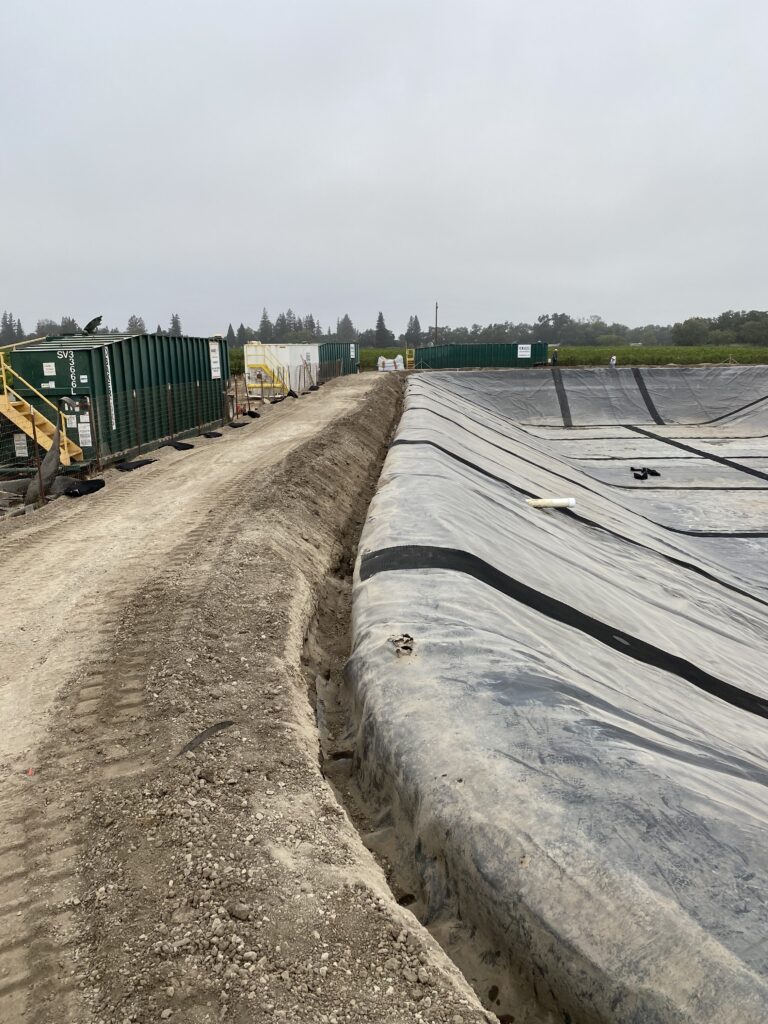
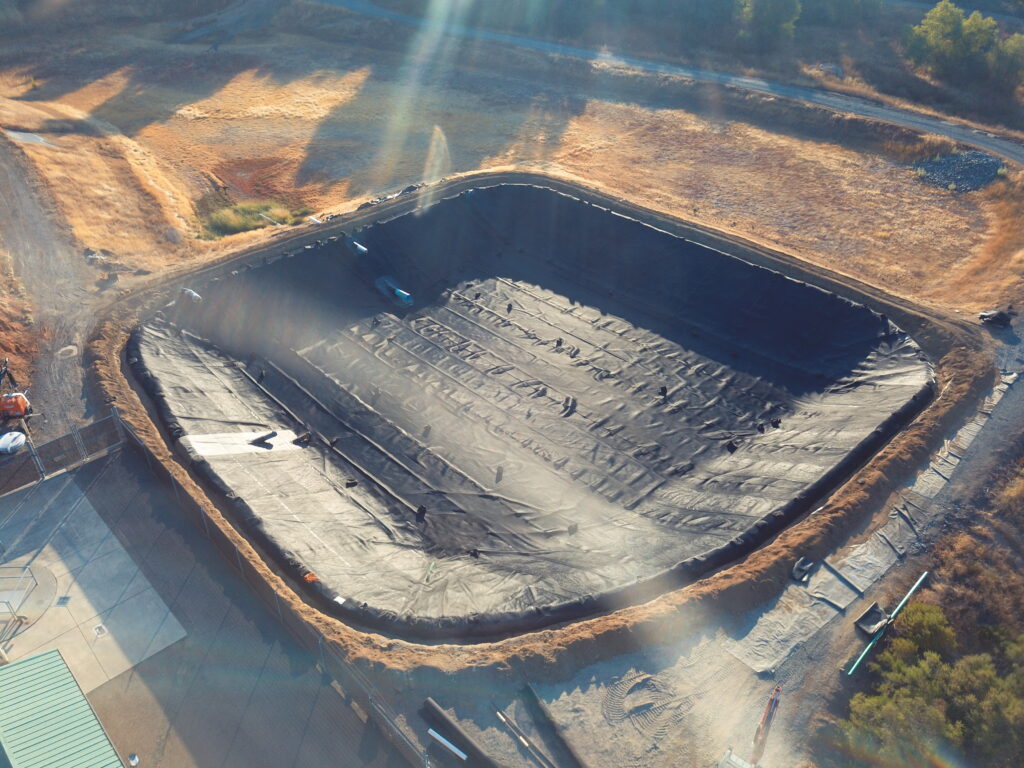
A lagoon liner is a barrier installed along the bottom and sides of an earthen lagoon or pond to limit liquid from seeping into the surrounding soil.
For wastewater applications, that barrier can play an especially important role. The U.S. Environmental Protection Agency describes wastewater lagoons, also known as wastewater stabilization ponds, as earthen ponds that use natural biological processes to break down wastewater. The EPA specifically identifies the liner as the nearly watertight barrier that helps prevent wastewater from seeping into groundwater.
Similar containment needs exist in agriculture.
Depending on the operation, lined lagoons and ponds may be used for:
Agricultural wastewater
Manure and livestock waste
Irrigation water
Process water
Wash water
Runoff
Leachate
Water storage
Settling and treatment ponds
In each case, the goal is similar: keep the liquid where it is supposed to be.
Why Lagoon Liners Matter
It can be tempting to think of the liner as just one component of a larger lagoon system. In reality, its performance can affect the entire operation.
Controlling seepage
One of the primary jobs of a geomembrane liner is to reduce the movement of liquid from the lagoon into the surrounding soil.
That is particularly important when the lagoon contains wastewater, manure or other materials that shouldn’t be allowed to freely migrate into the surrounding environment.
Protecting valuable water
Not every lagoon contains waste.
Agricultural operations frequently depend on ponds and lagoons for irrigation and other water-storage needs. In these situations, seepage isn’t simply an environmental concern. It can mean losing a resource the operation depends on.
A properly selected liner helps keep that water available for its intended use.
Supporting environmental and regulatory requirements
Wastewater and agricultural containment projects may be subject to federal, state and local requirements.
The USDA Natural Resources Conservation Service maintains standards addressing both waste treatment lagoons and pond sealing or lining with geomembranes and geosynthetic clay liners.
Requirements vary by location and application, which is another reason liner selection should begin with the specifics of the project rather than a one-size-fits-all recommendation.
Agricultural Lagoon Liners Have Their Own Challenges
Agricultural containment can be demanding.
A dairy lagoon, for example, doesn’t have the same job as a clean-water irrigation pond. A wastewater treatment lagoon may have completely different chemical, environmental and operational requirements.
Agricultural lagoon liners may be exposed to manure, organic waste, changing water levels, sunlight, weather and regular expansion and contraction.
Site conditions matter too.
Soil characteristics, groundwater conditions, pond dimensions, installation conditions and local requirements can all influence which material makes the most sense.
USDA guidance notes that synthetic liners may be appropriate when suitable clay isn’t available, transporting clay becomes too expensive, compacted clay cannot provide the required seepage control or local regulations require a synthetic liner.
That’s why the conversation shouldn’t begin with, “Which liner is cheapest?”
A better question is, “Which liner makes sense for this lagoon?”
Choosing a Geomembrane for a Lagoon
Geomembranes are available in different materials and thicknesses, and each has its own performance characteristics.
Carson works with liner materials suitable for a wide range of pond, reservoir, agricultural and containment applications, including reinforced polyethylene and reinforced polypropylene.
Depending on the material, Carson’s geomembrane options can provide features such as:
Puncture resistance
UV resistance
Flexibility
Long service life
Tolerance for expansion and contraction
Suitability for demanding containment environments
For example, Carson offers reinforced polypropylene materials designed for pond and reservoir liners, canal liners, leach ponds and manure containment, among other uses.
The best choice ultimately depends on the application.
A lagoon’s contents, dimensions, exposure, expected service life and site conditions all need to be considered before settling on a material.
Wastewater Lagoon Liners
Wastewater lagoons remain an important treatment option, particularly for smaller and rural communities.
According to the EPA, lagoon systems are widely used as an alternative to mechanical wastewater treatment plants and can provide a sustainable and cost-effective approach to wastewater treatment when they are properly designed, operated and maintained.
The liner is a critical part of that system.
For wastewater treatment ponds and lagoons, a geomembrane can provide a reliable barrier between wastewater and the surrounding ground while supporting the facility’s larger containment strategy.
And because wastewater projects can vary considerably, custom fabrication becomes especially valuable.
Rather than trying to make a standard liner work for a unique site, a custom geomembrane can be fabricated around the project’s actual dimensions and requirements.
Lagoon Liners for Farms, Ranches and Dairies
On agricultural properties, a lagoon may be part of an operation that needs to work every single day.
Dairies need to manage manure and wash water. Ranches need reliable water storage. Vineyards and other agricultural operations may depend on irrigation ponds and process-water systems.
When one of those systems fails, the problem isn’t theoretical. It can quickly become an operational headache.
Carson has worked with agricultural customers ranging from ranches and dairies to vineyards and wineries. That breadth of experience matters because agricultural projects rarely look exactly alike.
The liner has to work for the operation, not the other way around.
Custom Fabrication Makes a Difference
Large lagoon projects can have unusual dimensions, slopes, penetrations and site conditions. Custom fabrication allows the liner to be planned around those realities.
Carson fabricates geomembrane liners specifically for containment applications including irrigation ponds, wastewater treatment ponds, lagoons and reservoirs.
The process also includes inspection and testing because a liner is only useful if it performs once it’s in service.
This is where experience becomes difficult to replace.
Material specifications can tell you what a geomembrane is capable of. Decades spent fabricating liners for real-world projects teach you how those materials behave when the dimensions get large, the application gets complicated and the installation conditions aren’t perfect.
Experience Matters in Lagoon Containment
There are plenty of products where buying from the newest company in the market doesn’t carry much risk.
A lagoon liner probably shouldn’t be one of them.
Once a lagoon is filled and operational, discovering that the liner or fabrication wasn’t right for the application can be an expensive problem to correct.
Carson Liners has been fabricating custom liners for more than 45 years, serving agricultural, municipal and industrial customers with projects ranging from water storage to wastewater and environmental containment.
That history gives our team perspective that can’t come from a material specification sheet alone.
We’ve seen how containment needs differ from one industry to another. We understand that a dairy lagoon isn’t an irrigation pond, and an irrigation pond isn’t a municipal wastewater lagoon. We know that sometimes the most valuable thing we can do is help a customer identify what their project actually needs before fabrication begins.
After more than four decades in the liner business, we’re still doing what we’ve always done: listening to the customer, understanding the application and building a liner made for the job.
Need a Lagoon Liner?
Whether you’re planning a new wastewater lagoon, replacing an existing agricultural lagoon liner or trying to determine the right geomembrane for a pond or containment project, Carson Liners can help.
Our team can review your application, dimensions and project requirements and recommend a liner material suited to the job.
Contact Carson Liners for a free quote and talk with a team that has spent more than 45 years solving real-world containment problems.