• Skip to primary navigation
  • Skip to main content
  • Skip to primary sidebar
Carson Liners

Carson Liners

  • Home
  • Geomembranes
  • Water Tank Liners
    • Leaking Water Tank Repair
    • Stock Tank Liners
  • Plating & Containment Liners
  • Specifications
  • Industrial Liner Blog – Expert Insights and Solutions
  • Projects

TANK LININGS

Reline or Recoat? How to Get More Life Out of the Tank You Already Have

carsonliners · October 29, 2026 ·

Carson crew installing a custom liner inside an existing water storage tank

If your ranch tank is weeping at a seam, your winery cistern coating is peeling, or a bolted stock tank is staining the water, you’re probably weighing the same choice a lot of California owners face right now: recoat the tank, or put a liner in it?

That question is showing up in public projects this fall too, which is a useful signal for private owners. In October, the Eastern Municipal Water District approved rehab contracts for aging tanks with deteriorated coatings. Clovis moved forward on a Reservoir 4 tank liner change order. And in Kern County, a reservoir geomembrane lining project in McKittrick is set to start in mid-November. Different scales, same idea: keep the structure you have, and fix the water barrier. You don’t need a city budget to think that way. You need a tank that holds water without weeks of downtime or a full rebuild.

Here’s how the two options actually compare for personal and commercial use.

Why tanks get to this point

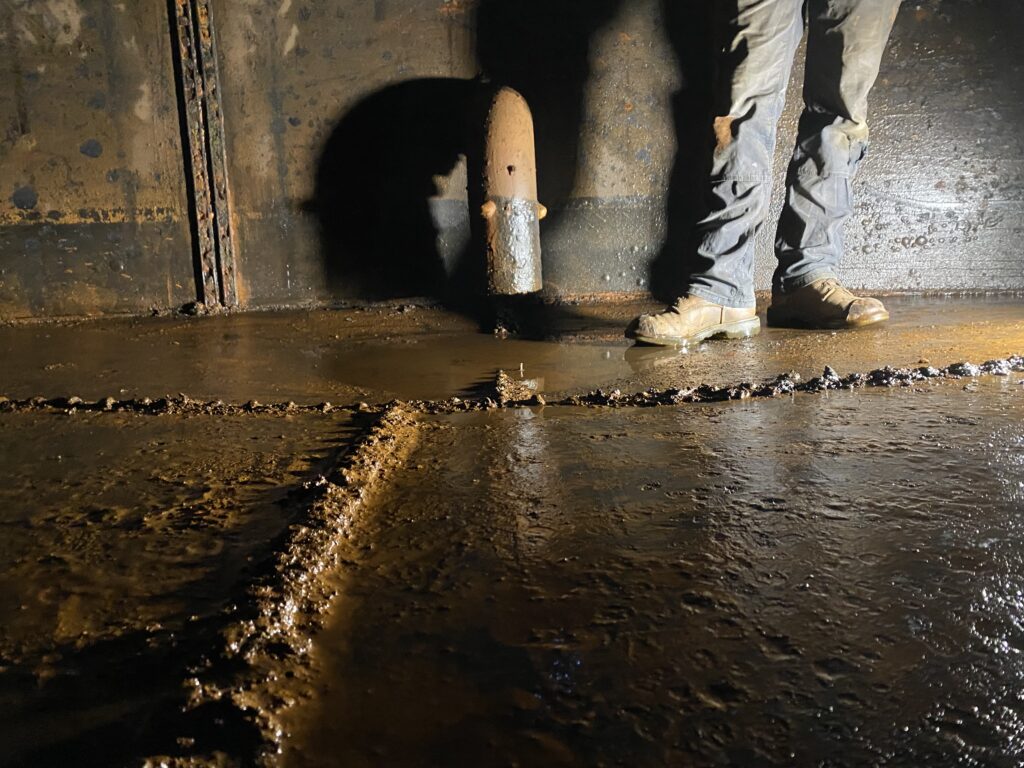
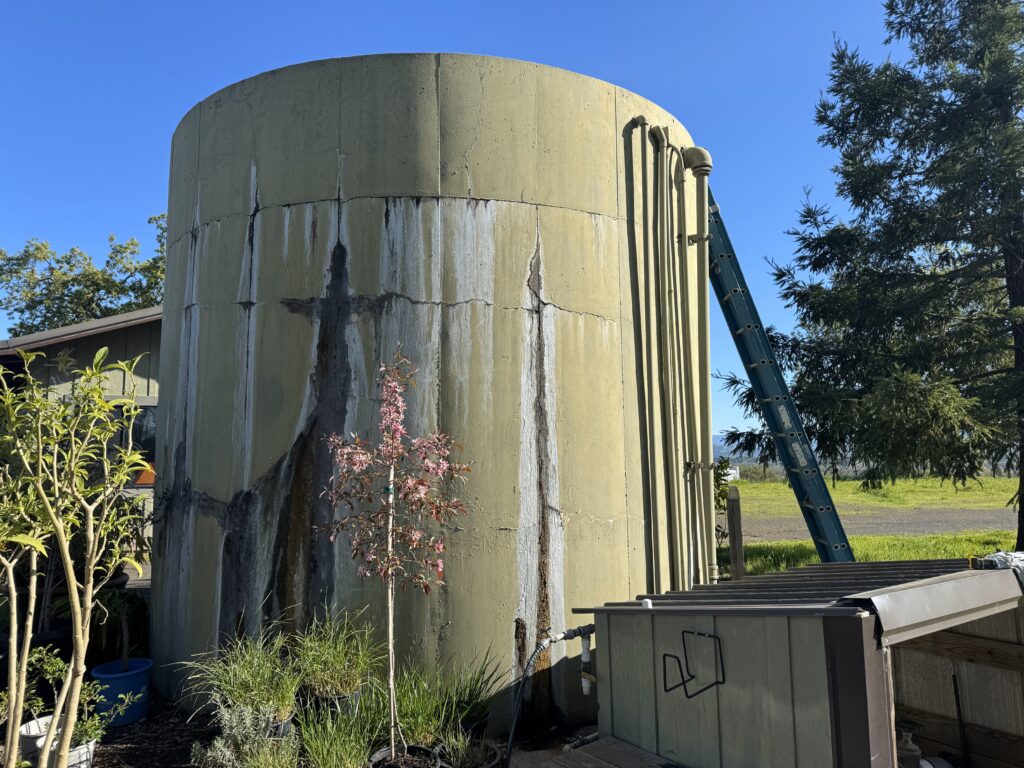
Most tanks don’t fail overnight. Coatings chalk, blister, and peel. Corrosion shows up at welds, seams, and the waterline. Concrete develops hairline cracks that grow with heat and cold. Bolted tanks start weeping at the gaskets.

We’ve covered the warning signs in our posts on leaky water tanks and how water tank liners solve tank issues. Once you see those signs, the real question is which fix fits your tank, your schedule, and what’s inside it.

Recoating: when it makes sense

Recoating means stripping the old coating (usually by abrasive blasting), repairing the steel or concrete, and applying a new interior system. It can be the right call when the tank is still structurally solid and you already maintain coatings on a schedule.

Plan for a few tradeoffs:

  • Prep is most of the job. Blasting, containing debris, and controlling humidity take time and add cost.
  • Cure time keeps the tank offline. Many coating systems need days before you can disinfect and refill.
  • The tank is still the barrier. If the wall keeps cracking or moving, a new coating can fail along with it.

For a large welded steel tank with good access and a planned maintenance window, recoating can be a solid path. For a remote hillside tank, a bolted tank with lots of seams, or a concrete tank that’s already leaking in several places, it’s often harder to justify.

Relining: when it makes sense

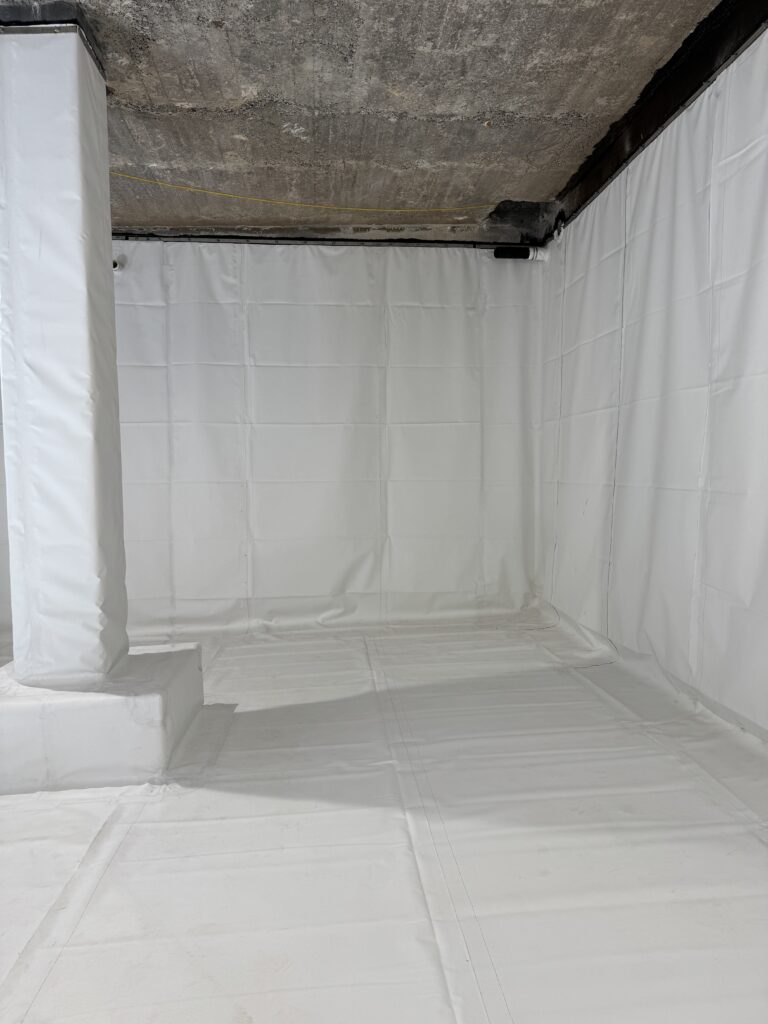
A liner works differently. Instead of bonding to the tank wall, a flexible membrane sits inside and holds the water. The tank becomes the structure. The liner becomes the barrier.

Relining often fits when:

  • The tank leaks but still stands. Pitting, seam leaks, and cracked concrete don’t have to be perfect, because the water no longer touches them.
  • You can’t spare long downtime. We fabricate custom water tank liners in our shop to your measurements. Most of the work happens before the liner ships. On site, you’re mainly positioning and attaching it, not waiting days for a coating to cure.
  • The tank is bolted, corrugated, or oddly shaped. Factory-made liners handle corners, fittings, and penetrations that are tough to coat evenly.
  • The tank is hard to reach. Shipping a folded liner to a ranch or vineyard is often simpler than hauling blasting and coating equipment up a dirt road.

That same idea shows up on smaller jobs too, like stock tank liners for galvanized tanks, and on larger open storage with a geomembrane over an old asphalt or concrete reservoir floor.

What material to use

Material depends on what you’re storing and how much sun the liner will see. Our material selection guide and specifications go deeper, but here’s the short version:

  • RPP (reinforced polypropylene) is our usual pick for long-term water storage. It’s flexible, heat-welded, and holds up outdoors. Drinking water grades carry NSF/ANSI 61 certification. If the tank is potable, read what NSF 61 certification means for tank liners and confirm the listing for that exact grade.
  • CSPE (HypaFlex, formerly Hypalon) is built for long-term sun exposure and floating covers. It’s a strong choice when a lot of liner sits above the waterline.
  • PVC is economical for protected, enclosed tanks.
  • HDPE suits large open containment when chemical resistance matters.

Ponds and lagoons follow similar logic. See our pond liners and lagoon liners for wastewater and agriculture. For process chemistry, look at plating and containment liners.

Timing it for your operation

Most owners schedule rehab when demand is lower: after peak irrigation, between crush seasons, or when a backup tank can cover the load. If you’re planning a liner for next season, start measuring now. Photograph fittings, note what’s stored, and mark how much of the liner will stay in the sun when the tank is drawn down. Custom fabrication takes lead time, and good measurements keep the project from slipping.

Five questions before you decide

  1. Is the structure still sound? A liner can handle leaks. It can’t hold up a collapsing tank.
  2. How long can the tank be offline? If the answer is days rather than weeks, that often points toward relining.
  3. What is stored? For drinking water, confirm NSF/ANSI 61 for the exact liner grade.
  4. How much sun will it get? Include the area above the waterline and any time the tank sits empty.
  5. Who measures, fabricates, and installs? Factory seams and an accurate fit prevent most headaches.

Send us what you’ve got

You don’t need to know “recoat or reline” before you call. Send the tank’s dimensions, a few photos, and what it holds. We’ll help you weigh the options and put together a free quote.

Call 800-423-2380 or email us.

What NSF 61 Certification Really Means And Why It’s Non-Negotiable for Tank Liners

· March 29, 2026 ·

NSF ANSI 61 Certification for Potable Water Tank Liners

If you’re evaluating potable water tank liners, you already know NSF/ANSI 61 isn’t a marketing term.

It’s the baseline.

When a liner is NSF 61 certified, it means the material has been independently tested and verified not to leach harmful contaminants into drinking water beyond allowable limits. For public systems operating under the Safe Drinking Water Act, that third-party verification matters.

Because when water sits in contact with a liner 24/7, formulation matters.

There’s no room for guesswork.

NSF 61: The Health-Effects Standard

NSF/ANSI 61 evaluates materials used in drinking water systems to ensure they meet established health-effects criteria. It specifically addresses chemical leaching into potable water.

It covers:

  • Regulated contaminant limits
  • Toxicological review of material components
  • Ongoing certification and monitoring

It does not address structural performance, installation quality, or fabrication standards.

Which means certification alone isn’t enough, but it is the starting point.

If a liner material isn’t NSF 61 certified, it shouldn’t be inside a potable tank. Period.

Why Municipal Systems Specify NSF 61

For municipalities and rural water associations, specifying NSF 61-certified materials does three things:

1. Reduces compliance risk
State agencies routinely expect NSF 61 documentation. Having it avoids unnecessary review cycles and approval friction.

2. Protects defensibility
When questions arise, and they will, third-party certification provides documentation that materials meet recognized public health standards.

3. Eliminates formulation uncertainty
Two materials can look similar structurally. They are not necessarily equivalent chemically. NSF 61 certification verifies the actual formulation.

For systems operating under scrutiny, that verification is not optional.

The Reality of Aging Tanks

Across California and the West, many potable tanks are decades old. Concrete degradation, steel corrosion, and coating failure are common.

Full replacement is expensive. It’s capital-intensive. It disrupts operations.

An NSF 61-certified liner provides a practical alternative – restoring internal containment, preventing further corrosion-related contamination, extending service life, maintaining compliance, and avoiding full reconstruction costs. If you want a deeper look at how liners address these structural and operational challenges, Carson outlines the process.

For budget-conscious districts, lining often delivers the strongest return on infrastructure dollars.

Certification Is the Baseline. Fabrication Is the Differentiator.

Here’s where experienced buyers pay attention.

NSF 61 certifies the material. It does not certify how that material is fabricated into a liner.

And fabrication quality directly affects:

  • Fit and anchoring
  • Accommodation of structural movement
  • Long-term seam integrity
  • Downtime during installation
  • Overall service life

In high-UV, high-heat environments like California, improper fabrication shortens lifespan, even if the base material is certified.

That’s why engineered, custom-fabricated liners outperform generic or field-built alternatives.

Why Carson Liners Is a Cost-Effective Long-Term Solution

Carson Liners fabricates potable water tank liners using NSF 61-certified materials and builds them specifically for municipal systems.

The advantage isn’t just compliance.

It’s total lifecycle value.

Carson liners are:

  • Custom fabricated to exact tank dimensions
  • Designed to accommodate structural movement
  • Engineered for Western environmental conditions
  • Installed to minimize operational downtime
  • Built for long-term performance

When you compare full tank replacement to lining, the cost difference is substantial. When you compare properly-fabricated liners to premature failure, the long-term savings become even clearer.

The most affordable option isn’t the lowest bid.

It’s the solution that extends tank life, protects water quality, and avoids recurring disruption.

If You’re Evaluating Liner Options, Ask the Right Questions

You already know what to look for. Confirm it:

  1. Are the materials currently certified to NSF/ANSI 61?
  2. Is certification verifiable?
  3. Is the liner custom engineered for potable use?
  4. How is fabrication handled?
  5. What service life can realistically be expected in your climate?

The answers will quickly separate commodity products from engineered municipal solutions.

The Bottom Line

NSF 61 certification protects drinking water from unintended chemical contamination. That’s the foundation.

But long-term performance, durability, and cost control come from experienced fabrication and proper design.

For municipalities and rural water systems managing aging infrastructure, an NSF 61-certified, professionally-fabricated liner is often the most practical and most affordable path forward – without compromising compliance or public trust.

If you’re evaluating options, speak to one of our experts. Fill out the form or email us at sales@carsonliners.com.

Custom Water Tank Liners

carsonliners · January 21, 2026 ·

A Cost-Effective Water Solution for Farms, Ranches, and Dairies When Your Well Isn’t Delivering

Custom water tank liners provide a practical solution when a well stops producing—or starts delivering less than your operation requires. Everything from crop irrigation to livestock hydration to dairy washdown cycles can be disrupted. Drilling a new well is expensive, time-consuming, and sometimes unpredictable. Repairs may or may not solve the issue.

That’s why more farms, ranches, and dairies are turning to custom liner solutions, which offer an immediate and cost-effective alternative.

This reflects what producers already know: reliable water access is non-negotiable, and smart, adaptable solutions are in demand.

Why Custom Water Tank Liners Are Becoming a Go-To Option

Farms, ranches, and dairies often have unused or aging tanks, cisterns, troughs, containment pits, or corrugated rings already on the property. These can quickly lose reliability—issues that custom liners are specifically designed to solve.

Instead of letting these assets sit idle, a custom liner transforms them into dependable, watertight reservoirs.

Whether you’re irrigating fields, providing water to cattle, or ensuring a steady supply for milking operations, custom liners allow you to expand or restore water capacity quickly without the financial burden of new construction or drilling.

How Custom Water Tank Liners Support Agricultural Operations

Custom Water Tank Liners Provide Reliable, Sealed Water Storage

Custom liners convert nearly any structure—steel, concrete, fiberglass, wood, or older containment systems—into a clean, dependable water tank. This is especially critical for ranches and dairies where livestock health and facility sanitation rely on consistent water access.

The EPA’s guidelines for sanitary water storage emphasize that tanks must remain sealed and structurally sound to prevent contamination, sediment buildup, and microbial intrusion issues that frequently arise in aging, unlined tanks.

Custom Water Tank Liners Cost Far Less Than Drilling a New Well

Well drilling can easily exceed $40,000, with no guarantee of hitting adequate capacity. By contrast, a custom liner allows you to repurpose existing infrastructure at a fraction of the cost. However, it’s essential to note that the cost of our liners and installation can exceed these ranges, depending on the size of the tank or pond. Even so, this approach remains one of the most financially practical water solutions available.

According to the USDA Natural Resources Conservation Service (NRCS), agricultural wells must meet specific production and safety standards. When wells decline or fail to meet demand, the agency recommends establishing supplemental or alternative water storage to maintain operational continuity.

Fast Turnaround and Minimal Downtime

Carson Liners fabricates each liner to exact specifications—a process outlined in our installation and fabrication guide, enabling quick installation even on large agricultural tanks.

In urgent situations, many operations can have functional water storage in a matter of hours rather than weeks.

Designed to Withstand Agricultural Demands

Farms, ranches, and dairies operate in some of the most demanding environments. Tank liners must endure:

  • Intense UV exposure
  • Extreme heat and freeze events
  • Shifting soil and tank movement
  • Chemical washdown (especially in dairies)
  • Continuous water pressure
  • Heavy daily use

At Carson Liners we utilize commercial-grade geomembranes engineered for strength, longevity, and environmental resilience.

Why Material Quality Matters for Agricultural Water Storage

Agricultural water systems face unique challenges: mineral-heavy groundwater, daily temperature swings, and chemical exposure can degrade low-quality liners quickly.

Substandard materials often lead to:

  • Cracking
  • Brittleness
  • Tears and punctures
  • Contamination
  • Frequent replacements

Carson Liners avoids these issues by fabricating liners in controlled environments to ensure consistent material integrity and durable, high-strength welds. The result is a liner that performs reliably and lasts longer under real-world agricultural stress. Material quality matters, and Carson’s geomembrane liners are engineered to avoid the cracking, leaching, and early failure common in low-grade materials.

Advantages of Custom Water Tank Liners from Carson Liners

Precision Fit

Agricultural tanks—especially older or modified ones—are rarely uniform. Carson Liners designs each product to match your tank’s exact dimensions, reducing stress points and extending lifespan.

Controlled Fabrication

All seams and welds are created indoors for structural consistency and superior quality.

Straightforward Installation

Reinforced and labeled, our liners arrive ready to go, keeping installation simple and downtime to a minimum. And if you need help, we offer installation. Some liners really do need a pro.

Excellent for Emergency Preparedness

When water supply becomes uncertain, custom liners offer one of the fastest and most cost-effective ways to restore or expand storage.

Applications Across Farms, Ranches, and Dairies

For Farms

  • Irrigation water reservoirs
  • Rainwater harvesting tanks
  • Seasonal storage during drought
  • Greenhouse and nursery supply tanks

For Ranches

  • Large-volume livestock watering
  • Backup supply during peak heat
  • Water stations for rotational grazing
  • Remote water storage for off-grid areas

For Dairies

  • Milking parlor washdown supply
  • Clean water storage for sanitation
  • Large-volume daily-use reservoirs
  • Backup systems for high-demand periods

The Farm Service Agency (FSA) encourages agricultural producers to incorporate secure, contamination-resistant water storage as part of long-term water management and conservation planning—making properly lined tanks a smart fit within these federal guidelines.

The Bottom Line on Custom Water Tank Liners

When a well underperforms or fails entirely, water shortages can escalate quickly across farms, ranches, and dairies. Custom water tank liners provide a dependable, cost-effective, and fast solution—turning existing infrastructure into durable water storage without major construction or drilling expenses.

Carson Liners delivers precisely engineered, high-quality liners designed specifically for agricultural environments, helping operations stay prepared, productive, and resilient no matter what the season brings.


For more information on water tank cleaning, speak to one of our experts. Fill out the form below or email us at sales@carsonliners.com.

Clean Tanks, Safe Water

carsonliners · November 7, 2025 ·

Water tank maintenance to keep stored water safe

Carson Liners’ Complete Maintenance Guide

Water storage tanks are critical infrastructure — whether for homes, farms, or commercial systems. However, over time, even well-built tanks and those with commercial-grade liners can compromise water quality and system integrity if left unchecked. At Carson Liners, we’ve built decades of experience specializing in water tank health: liners, repair, long-term maintenance, and cleaning. When you partner with Carson Liners, you don’t just get service, you get assurance that your water system is in expert hands. This guide explores why rigorous tank care is non-negotiable.

Why Tank Cleaning is Crucial

Keeping your water tank clean isn’t just about appearances; it’s about protecting your health, your wallet, and your peace of mind. Clear water doesn’t always mean safe water. Hidden issues can be building up inside long before you notice anything’s wrong. At Carson Liners, we understand that caring for a water tank is about more than just routine upkeep; it’s about protecting something essential through water tank maintenance. Over the years, we’ve learned that even minor issues, if left unresolved, can grow into costly or disruptive problems. Our role is to apply that experience to help customers identify challenges early, keep their systems running smoothly, and give them confidence that their water supply is being cared for with expertise.

Hidden Contaminants & Sediment Accumulation in Water Tank Maintenance

Over time, particles, minerals, organic matter, and debris settle to the bottom of storage tanks. This sediment not only reduces usable volume but also serves as a base layer for microbial growth, contributes to turbidity (cloudiness), and can clog outlet pipes or strain pumps.

Without periodic cleaning, these residues accumulate. According to extension guidance from New Mexico State University, “even when water in a tank is renewed through outflow/inflow cycles, contaminants will remain behind to degrade existing stored quantities.” Once sediment takes hold, it creates a chain reaction of problems that are harder and more expensive to fix down the road. By addressing buildup early, you can help keep your tank operating at full capacity, your water clear and safe, and your system free from the extra strain that sediment causes.

Algae, Biofilm & Microbial Growth in Water Tank Maintenance

In California, where long stretches of sunshine and warm weather are the norm, water tanks are especially vulnerable to algae and biofilm growth. High temperatures speed up microbial activity, while drought conditions often mean water sits longer in storage, creating the kind of stagnant zones where algae thrive. Add in the intense UV exposure that tanks face in the California climate, and you’ve got the perfect recipe for taste, odor, and safety issues.

That’s why Carson Liners places such importance on regular disinfection and proactive maintenance. We follow proven industry standards like AWWA C652, which outline how chlorine and other disinfectants must be applied and monitored in potable water systems. By pairing these nationally-recognized protocols with solutions designed for California’s unique climate challenges, we help keep stored water safe, clean, and ready to use no matter how hot or dry the season gets.

Material Corrosion, Cracks & Leaks in Water Tank Maintenance

Keeping the inside of a tank clean is only part of the equation — the structure itself also plays a direct role in protecting what’s stored within. If the tank walls begin to crack, corrode, or leak, contaminants from the outside can make their way in, and the water you’ve worked hard to keep clean is no longer safe. That’s why it’s just as important to guard the integrity of the tank as it is to manage the quality of the water inside.

Learn more about how water tank liners solve tank issues.

Insect Intrusion & Fixture Failures in Water Tank Maintenance

Small openings, damaged lids, worn seals, or missing vents invite insects, debris, or rodents. Once inside, these can spoil water quality or lead to contamination. Moreover, valves, gauges, and pipe fittings may degrade and need repair or replacement to maintain proper system performance.

Regulatory & Health Considerations in Water Tank Maintenance

If your water is being used for drinking or is part of a regulated public system, there are clear standards in place to make sure it stays safe. Under the Safe Drinking Water Act (SDWA), utilities are expected to meet strict requirements, and for good reason — clean water is essential to health and community well-being. To help operators stay on track, the U.S. EPA even provides a practical checklist for finished water storage tanks. This resource covers everything from structural integrity and drainage to overflow design and disinfection, ensuring that every part of the system is working to keep stored water safe.

Professional Tank Cleaning & Sanitization

In many water systems, keeping the tank truly clean requires more than just a quick rinse. As part of regular water tank maintenance, it’s a step-by-step process that involves draining the tank, safely removing built-up sludge, scrubbing away residue, disinfecting with approved solutions, and rinsing thoroughly. Once the cleaning process is complete, the water system operator typically conducts any necessary testing before the tank is placed back into service.

That’s the level of care we believe every tank deserves. While our specialty at Carson Liners is in designing and installing high-quality liners, we know that liners and cleaning often go hand-in-hand. A liner will only perform its best if the environment around it is clean and well-maintained. That’s why, in many cases, we’re able to coordinate or support these full cleaning and sanitization services alongside our liner work. Our goal is simple: to make sure what’s stored inside your tank stays safe, reliable, and ready for use.

When you choose Carson Liners, you’re not just hiring a vendor; you’re partnering with technical experts whose mission is to ensure your water system remains safe, efficient, and durable.

For more information on water tank cleaning, speak to one of our experts. Fill out the form below or email us at sales@carsonliners.com.

How water tank liners can solve tank issues

carsonliners · June 24, 2025 ·

Tank liner installation protecting against structural damage

In places where the weather changes from life-threatening droughts to torrential downpours, tank liners provide essential protection for emergency water storage systems. A water tank is a must for regions under constant risk of such weather. Whether for drinking water, wildfire protection, or daily use, a reliable water supply ensures life can go on uninterrupted.

Carson Liners provides durable, custom-fit water tank liners that help protect and preserve your stored water. Ensuring your tank is ready when it’s needed most. To understand how to best protect this essential commodity, it’s important to identify potential threats.

Common Water Tank Issues

No matter what part of the country you live in, water tanks are exposed to tough conditions year-round. In regions like California, where earthquakes, drought, wildfires, and floods occur more often, rapid deterioration is likely. But whatever the environment, all tanks face similar aging and structural challenges. Bottom line, the elements significantly impact the reliability of water storage systems. And in the end, this greatly affects the quality of water inside them.

Let’s look at some types of tanks and the risks they pose when left unaddressed.

Concrete Tanks: When Concrete Tanks Crack Under Pressure

Concrete tanks are known for their durability and strength, but they’re not indestructible. Over time, tanks can develop stress cracks, which pose a serious problem if left unaddressed. Before we delve into how to fix concrete cracks, it’s essential to understand why they occur in the first place.

Why Do Concrete Tanks Crack?

  1. Ground Movement
  2. Thermal Expansion & Contraction
  3. Aging Infrastructure

Natural soil shifts from seismic activity, construction, or settling apply uneven stress to the tank structure. This can lead to horizontal or vertical cracks. Additionally, concrete expands in hot weather and contracts in cooler temperatures. These thermal changes cause stress. As concrete tanks age, the supporting materials begin to deteriorate. Older tanks may have outdated construction methods or lower-quality materials. These factors make them more susceptible to cracking.

While the causes of stress cracks may seem like natural and gradual processes, the consequences can escalate quickly if these cracks are left untreated. These stress cracks open the door to a host of problems, some of which aren’t just costly, but also hazardous. Stress cracks might seem small at first, but they can:

  • Lead to leaks that waste thousands of gallons of water
  • Accelerate corrosion of internal reinforcements, weakening the structure
  • Contaminate the surrounding soil, especially in tanks storing chemicals or wastewater
  • Violate environmental regulations, resulting in fines or shutdowns

Fixing damaged tanks is a necessity. However, there are affordable, reliable alternatives if repairing or replacing immediately isn’t an option. Tank liners are the answer. Carson Liners’ professionals know tanks. They know what types of liners are best suited for your tank’s needs.

While concrete tanks are a widespread option for permanent, large-volume uses, steel tanks are versatile and more commonly used throughout the country. Known for their durability, flexible design and well-rounded use, steel tanks are often used for water or to store chemicals. Because of these uses, it’s important to understand how to best protect your steel tank.

Steel Tanks: Your Tank’s Best Defense Is an Inside Job

If you’ve got a steel tank, especially in a coastal or humid part of the country, it’s no surprise that rust shows up fast and grows rapidly. Corrosion is a real problem. The salty air influences the life of your tank.

Just because a steel tank seems solid on the outside doesn’t mean everything’s fine on the inside. In coastal parts of California, the environment works against you — sea air, salty wind, and relentless sunlight all team up to wear down storage tanks from within. By the time the damage shows up, it’s often already serious.

If you’ve been fighting rust with a cycle of sanding, welding, coating, and repainting, you already know how exhausting it is. Not to mention expensive. Every round of repairs means more downtime, more labor, and more uncertainty. There’s always that lingering question: how long until we’re doing this all over again?

The solution? Don’t wait for things to fall apart. A custom-fitted liner provides your tank with the internal protection it needs before problems arise, saving you money and stress in the long run.

Concrete tanks are durable. Steel tanks are versatile. And while both offer many attributes ideal for storage, wood tanks offer these same perks but with the warmth and classic beauty only natural materials provide. Despite their beauty and durability, they aren’t without problems of their own. Let’s look at some.

Rotting Redwood and Wooden Tanks: Preserving the Classics

Wood is Beautiful, but It’s Not Forever

Redwood and other wooden tanks are naturally resilient, but they’re still organic materials. Over time, constant exposure to water, sun, and temperature changes causes the wood to shrink, swell, and slowly deteriorate.

Rot, Warping, and Cracks Develop Quietly

You may not notice the damage right away, but inside the tank, trapped moisture creates the perfect environment for wood rot, mildew, and microbial decay. As the wood weakens, it starts to bow, split, or crack, often from the inside out.

Leaks Lead to Water Loss and Structural Risks

Once the integrity of the wood is compromised, leaks become inevitable. What begins as a drip can quickly escalate into gallons of lost water, damage to the surrounding area, and in some cases, complete tank failure.

Replacement Isn’t Always an Option

Fully rebuilding a wooden tank can be expensive, time-consuming, and may erase the charm or historical value of the original structure. For many landowners, replacement simply isn’t feasible or desirable. But not just any tank liner will do. Water is the source of life, they should be made the best materials. Carson Liners’ team of experts knows what a quality liner looks like.

So, even for the beautiful wood tanks, tank liners are an affordable, reliable option. A high-quality liner from Carson Liners isn’t just a temporary fix — it’s a comprehensive solution that shields your tank’s interior from these environmental stressors, effectively restoring and preserving your investment for the long haul.

Why California Tank Owners Trust Carson Liners

California’s conditions make tank liners especially important. Frequent changes in weather strain tanks, no matter the material. With this unpredictability, water conservation needs to be a top priority. At Carson Liners designs tank liners that are:

  • Custom-fit to your tank’s exact dimensions and material
  • Made from durable, potable-water-safe materials
  • Engineered to withstand both hot, dry climates and seismic shifts

But tank liners from Carson aren’t just for the West Coast. Across the country, storage tanks face their own challenges, and liners are a practical solution wherever you are.

Why a Water Tank Liner is Smarter Than a Replacement

Replacing a water tank is expensive, disruptive, and time-consuming. In most cases, a liner does the job at a fraction of the cost. At Carson, liners are:

  • Quick to install
  • Custom-built for each tank’s shape, size, and material
  • Backed by years of expertise in tank restoration and containment

Whether your tank is concrete, steel, or wood, Carson Liners has a proven solution to help you get more life out of it while protecting your water and your wallet. With custom designs, professional installation, and materials that hold up under pressure, there’s no better way to secure your water supply.

For more information on the importance of quality fabrication in liner manufacturing, speak to one of our experts. Fill out the form below or email us at sales@carsonliners.com.

  • Page 1
  • Page 2
  • Go to Next Page »

Primary Sidebar

Pond Liner Quote Round Tank Liner Quote Rectangular Tank Liner Quote Plating Tank or Containment Liner Quote
For a free liner quote call 800-423-2380

sales@carsonliners.com


711 Portal St. Cotati, CA 94931
Phone: 800-423-2380 | Fax: 707-795-8691

CRWA Associate Member
Sonoma County Farm Bureau Supporting Member
Napa County Farm Bureau Business Member
CA Contractors License #902361

Contact Us For a Free Quote

    OR

    Call Now For A Free Quote

    Show Desktop Version

    Copyright © 2026 carsonliners.com