• Skip to primary navigation
  • Skip to main content
  • Skip to primary sidebar
Carson Liners

Carson Liners

  • Home
  • Geomembranes
  • Water Tank Liners
    • Leaking Water Tank Repair
    • Stock Tank Liners
  • Plating & Containment Liners
  • Specifications
  • Industrial Liner Blog – Expert Insights and Solutions
  • Projects

POND LINERS

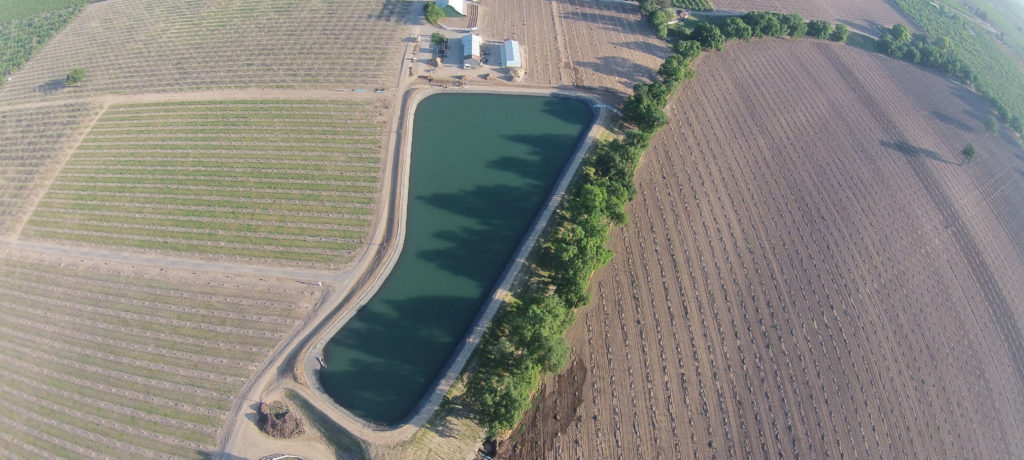
Lagoon Liners for Wastewater and Agriculture

carsonliners · September 15, 2026 ·

Built for Long-Term Containment

When you’re dealing with thousands or even millions of gallons of wastewater, irrigation water or agricultural waste, a liner is doing much more than holding water.

It’s protecting the surrounding soil and groundwater, helping control seepage and keeping a critical part of an operation functioning the way it should.

That makes choosing the right lagoon liner an important decision, whether the project involves a wastewater treatment facility, dairy, ranch, vineyard or other agricultural operation.

At Carson Liners, we’ve spent more than 45 years fabricating custom liners for projects where dependable containment matters. That experience has taught us something important: there isn’t one lagoon liner that makes sense for every application.

The right solution starts with understanding what the lagoon is holding, how the site operates and what the liner will be expected to withstand over time.

What Is a Lagoon Liner?

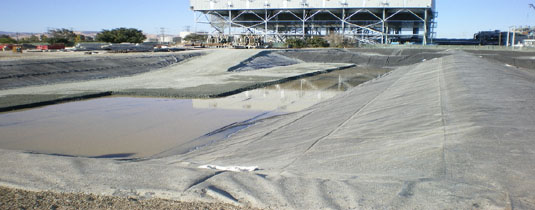
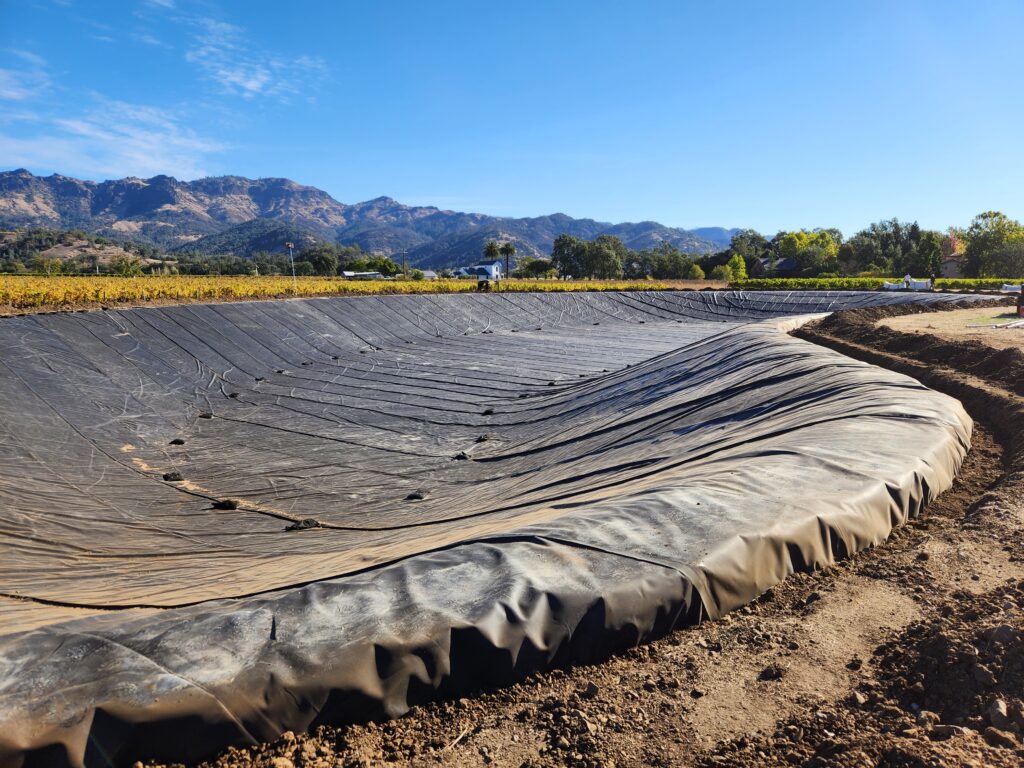
A lagoon liner is a barrier installed along the bottom and sides of an earthen lagoon or pond to limit liquid from seeping into the surrounding soil.

For wastewater applications, that barrier can play an especially important role. The U.S. Environmental Protection Agency describes wastewater lagoons, also known as wastewater stabilization ponds, as earthen ponds that use natural biological processes to break down wastewater. The EPA specifically identifies the liner as the nearly watertight barrier that helps prevent wastewater from seeping into groundwater.

Similar containment needs exist in agriculture.

Depending on the operation, lined lagoons and ponds may be used for:

  • Agricultural wastewater

  • Manure and livestock waste

  • Irrigation water

  • Process water

  • Wash water

  • Runoff

  • Leachate

  • Water storage

  • Settling and treatment ponds

In each case, the goal is similar: keep the liquid where it is supposed to be.

Why Lagoon Liners Matter

It can be tempting to think of the liner as just one component of a larger lagoon system. In reality, its performance can affect the entire operation.

Controlling seepage

One of the primary jobs of a geomembrane liner is to reduce the movement of liquid from the lagoon into the surrounding soil.

That is particularly important when the lagoon contains wastewater, manure or other materials that shouldn’t be allowed to freely migrate into the surrounding environment.

Protecting valuable water

Not every lagoon contains waste.

Agricultural operations frequently depend on ponds and lagoons for irrigation and other water-storage needs. In these situations, seepage isn’t simply an environmental concern. It can mean losing a resource the operation depends on.

A properly selected liner helps keep that water available for its intended use.

Supporting environmental and regulatory requirements

Wastewater and agricultural containment projects may be subject to federal, state and local requirements.

The USDA Natural Resources Conservation Service maintains standards addressing both waste treatment lagoons and pond sealing or lining with geomembranes and geosynthetic clay liners.

Requirements vary by location and application, which is another reason liner selection should begin with the specifics of the project rather than a one-size-fits-all recommendation.

Agricultural Lagoon Liners Have Their Own Challenges

Agricultural containment can be demanding.

A dairy lagoon, for example, doesn’t have the same job as a clean-water irrigation pond. A wastewater treatment lagoon may have completely different chemical, environmental and operational requirements.

Agricultural lagoon liners may be exposed to manure, organic waste, changing water levels, sunlight, weather and regular expansion and contraction.

Site conditions matter too.

Soil characteristics, groundwater conditions, pond dimensions, installation conditions and local requirements can all influence which material makes the most sense.

USDA guidance notes that synthetic liners may be appropriate when suitable clay isn’t available, transporting clay becomes too expensive, compacted clay cannot provide the required seepage control or local regulations require a synthetic liner.

That’s why the conversation shouldn’t begin with, “Which liner is cheapest?”

A better question is, “Which liner makes sense for this lagoon?”

Choosing a Geomembrane for a Lagoon

Geomembranes are available in different materials and thicknesses, and each has its own performance characteristics.

Carson works with liner materials suitable for a wide range of pond, reservoir, agricultural and containment applications, including reinforced polyethylene and reinforced polypropylene.

Depending on the material, Carson’s geomembrane options can provide features such as:

  • Puncture resistance

  • UV resistance

  • Flexibility

  • Long service life

  • Tolerance for expansion and contraction

  • Suitability for demanding containment environments

For example, Carson offers reinforced polypropylene materials designed for pond and reservoir liners, canal liners, leach ponds and manure containment, among other uses.

The best choice ultimately depends on the application.

A lagoon’s contents, dimensions, exposure, expected service life and site conditions all need to be considered before settling on a material.

Wastewater Lagoon Liners

Wastewater lagoons remain an important treatment option, particularly for smaller and rural communities.

According to the EPA, lagoon systems are widely used as an alternative to mechanical wastewater treatment plants and can provide a sustainable and cost-effective approach to wastewater treatment when they are properly designed, operated and maintained.

The liner is a critical part of that system.

For wastewater treatment ponds and lagoons, a geomembrane can provide a reliable barrier between wastewater and the surrounding ground while supporting the facility’s larger containment strategy.

And because wastewater projects can vary considerably, custom fabrication becomes especially valuable.

Rather than trying to make a standard liner work for a unique site, a custom geomembrane can be fabricated around the project’s actual dimensions and requirements.

Lagoon Liners for Farms, Ranches and Dairies

On agricultural properties, a lagoon may be part of an operation that needs to work every single day.

Dairies need to manage manure and wash water. Ranches need reliable water storage. Vineyards and other agricultural operations may depend on irrigation ponds and process-water systems.

When one of those systems fails, the problem isn’t theoretical. It can quickly become an operational headache.

Carson has worked with agricultural customers ranging from ranches and dairies to vineyards and wineries. That breadth of experience matters because agricultural projects rarely look exactly alike.

The liner has to work for the operation, not the other way around.

Custom Fabrication Makes a Difference

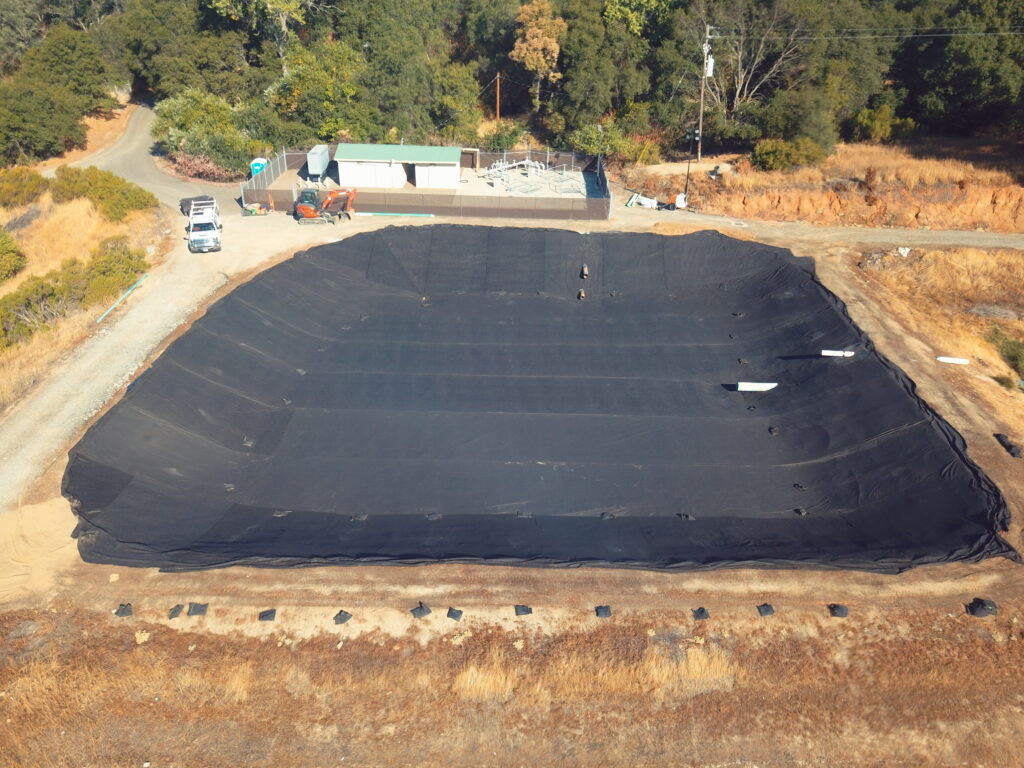
Large lagoon projects can have unusual dimensions, slopes, penetrations and site conditions. Custom fabrication allows the liner to be planned around those realities.

Carson fabricates geomembrane liners specifically for containment applications including irrigation ponds, wastewater treatment ponds, lagoons and reservoirs.

The process also includes inspection and testing because a liner is only useful if it performs once it’s in service.

This is where experience becomes difficult to replace.

Material specifications can tell you what a geomembrane is capable of. Decades spent fabricating liners for real-world projects teach you how those materials behave when the dimensions get large, the application gets complicated and the installation conditions aren’t perfect.

Experience Matters in Lagoon Containment

There are plenty of products where buying from the newest company in the market doesn’t carry much risk.

A lagoon liner probably shouldn’t be one of them.

Once a lagoon is filled and operational, discovering that the liner or fabrication wasn’t right for the application can be an expensive problem to correct.

Carson Liners has been fabricating custom liners for more than 45 years, serving agricultural, municipal and industrial customers with projects ranging from water storage to wastewater and environmental containment.

That history gives our team perspective that can’t come from a material specification sheet alone.

We’ve seen how containment needs differ from one industry to another. We understand that a dairy lagoon isn’t an irrigation pond, and an irrigation pond isn’t a municipal wastewater lagoon. We know that sometimes the most valuable thing we can do is help a customer identify what their project actually needs before fabrication begins.

After more than four decades in the liner business, we’re still doing what we’ve always done: listening to the customer, understanding the application and building a liner made for the job.

Need a Lagoon Liner?

Whether you’re planning a new wastewater lagoon, replacing an existing agricultural lagoon liner or trying to determine the right geomembrane for a pond or containment project, Carson Liners can help.

Our team can review your application, dimensions and project requirements and recommend a liner material suited to the job.

Contact Carson Liners for a free quote and talk with a team that has spent more than 45 years solving real-world containment problems.
Protecting Clean Water After Floods

carsonliners · September 28, 2025 ·

Protecting clean water after floods with Carson Liners pond liners

How Carson Liners Safeguards Your Resources

Summer has a way of reminding us just how vital water is. It cools us beneath the relentless California sun, fills our lakes and rivers with life, and gathers families around pools and coastlines. Water sustains us, refreshes us, and fuels unforgettable summer memories—but protecting clean water becomes critical when disasters strike.

At Carson Liners, we understand just how powerful water can be — both as a life-giving resource and, at times, a force of destruction. That’s why we specialize in high-quality geomembrane liners, pond liners, and water tank liners designed to safeguard communities, ranches, and farms across California and beyond. But as powerful as it is for good, water can also turn devastating in an instant.

When heavy rains arrive and rivers rise, the same force that nourishes can quickly destroy, leaving behind heartbreaking loss and damage. It’s in these moments, when nature tests our resilience, that preparation and protection matter most. Floods, like the ones that happen all too regularly in California, and most recently the floods that swept unforgivingly through the Texas Hill Country, are devastating.

Flooding doesn’t just reshape the land; it reshapes lives. In California, record-setting storms have swept through valleys, leaving behind destroyed homes, lost livestock, and contaminated water sources. Sudden flash floods have taken lives in minutes, sweeping away homes, campsites, and years of hard work. These moments remind us that floods carry more than water—they carry grief, hardship, and the challenge of starting over. These tragedies are stark reminders that water, while vital, can also be destructive when it comes all at once.

For ranchers and farmers, floods bring a double burden: the heartbreak of loss and the practical challenge of rebuilding. While nothing can undo the human toll, steps can be taken to lessen the damage, protect resources, and build resilience for the future. Protecting clean water through pond and rainwater collection system liners is a solution that not only conserves water but also shields it from contamination during disasters.

Protecting Clean Water: Why Lined Ponds Matter in Flood Recovery

When floodwaters rise, they don’t arrive clean. They drag soil, manure, pesticides, and debris across the landscape, often finding their way into unprotected ponds or tanks. For ranchers, this can mean losing the clean water livestock depend on. For families, it can turn a rainwater supply into something unsafe for even garden use. In these moments of loss, the last thing anyone needs is tainted water.

This is where Carson Liners’ custom pond liners and wastewater liners make a real difference. Our high-quality geomembrane liners create a durable barrier that keeps your water safe from harmful contaminants during and after disasters. According to the U.S. Department of Agriculture Natural Resource Conservation Service, using geomembrane liners is one of the most effective ways to control seepage, conserve clean water, and protect against contamination when natural disasters strike.

Originally designed to help industries like wineries manage chemical and organic wastewater, Carson’s liners have proven invaluable for farm ponds, irrigation systems, rainwater storage, and water tanks — especially when storms strike without warning.

And when the floodwaters finally recede, the challenges don’t end. What’s left behind is often just as dangerous: tainted water sources. As the surging currents move through fields and pastures, they carry with them everything in their path — manure, pesticides, sewage, and debris — dumping it directly into ponds, tanks, and rainwater systems. For ranchers, this can mean losing the only clean water their cattle depend on to survive. For families, it can turn what was once a safe rainwater supply into something unusable, unsafe even for their gardens.

In moments like these, when so much is already lost, protecting clean water becomes more than a matter of convenience — it’s about preserving hope and stability in the aftermath of disaster. That’s why high-quality geomembrane liners are so important. Carson’s custom pond and wastewater liners are built to keep water safe, shielding it from harmful contaminants when everything else feels beyond control.

Originally developed to help industries like wineries manage chemical and organic wastewater, Carson’s liners have proven invaluable for farm ponds, irrigation systems, and rainwater storage. Our durable construction, regulatory compliance, and long-term performance mean that even when floodwaters bring chaos, these liners help ensure clean, reliable water is available — offering one small but critical step toward rebuilding lives, ranches, and communities.

That’s why investing in high-quality geomembrane liners, including specialized wastewater pond liners, can make a meaningful difference. These liners are designed not only to keep water in, but to keep harmful materials out. Originally developed to help wineries contain organic and chemical wastewater, their durable construction, regulatory compliance, and long-term performance mean they work superbly across farm ponds, irrigation systems, and rainwater storage, even when floodwaters arrive filled with uncertainty.

By installing a durable liner, you’re creating a barrier that shields your precious reserves from contamination, ensuring that even in the aftermath, you have reliable, safe water for recovery. Consider the rancher whose herd was devastated, but whose lined pond remained uncontaminated, providing clean water that brought a glimmer of hope when it was needed most. Or the family whose garden became a symbol of renewal, thanks to an intact rainwater tank when all else seemed lost.

Custom Solutions for Ranchers, Growers, and Homeowners

No two floods leave behind the same story. One rancher might lose part of a herd, while another sees entire fields underwater. A family may watch as their rainwater tank fills with mud and debris, or a grower may face the painful task of clearing contaminated irrigation ponds before crops can recover. The devastation is personal, unpredictable, and deeply felt—and that’s why custom pond liners can be so important. They give property owners a tool to protect what they can, even when so much feels beyond their control.

At Carson Liners, we believe quality fabrication isn’t optional — it’s essential. Our Reinforced Polypropylene (RPP) liners and Reinforced Polyethylene (RPE) liners are engineered for durability, environmental protection, and long-term performance, making them ideal for the extreme conditions often seen in California weather and the Texas Hill Country.

  • Durable – Able to endure years of punishing UV exposure and environmental stress without breaking down.
  • Leak-Resistant – Helping ranchers and homeowners conserve every precious drop of water, especially critical in the wake of a flood or during drought.
  • Flood-Resilient – Tough enough to withstand sudden water surges and debris that often tear through unprotected systems.
  • Long-Lasting – Offering peace of mind far beyond the quick fixes of thin, off-the-shelf liners that can tear in the very moments they’re needed most.

These qualities make Carson’s liners not just products, but lifelines. From agricultural ponds that keep livestock alive to irrigation basins that protect a season’s crops to rainwater systems that sustain families after storms, Carson Liners delivers security when it matters most.

In California’s Central Valley, where ranchers sometimes endure flooding and drought in the same year, lined ponds mean fewer losses and more security during unpredictable cycles. In the Texas Hill Country, where flash floods have devastated an entire county in minutes, a lined rainwater system can mean families still have safe, usable water when municipal systems are strained or offline.

Floods may bring heartbreak, but with the right tools, they don’t have to take away everything. A custom liner can’t replace what’s been lost—but it can protect the water that sustains life and recovery when it matters most.

For more information about how Carson Liners supports disaster resilience, speak with one of our experts by filling out the form below or contact us at sales@carsonliners.com.

WATER PRESERVATION

carsonadmin · May 1, 2023 ·

As farmers and ranchers, it’s essential to consider the long-term sustainability of your land and your livelihood. One way to do this is by building a pond, which can provide several benefits for crops and livestock. First and foremost, a pond can serve as a reliable water source for your animals, especially during drought seasons or other water shortages when natural sources of water may be scarce or unreliable. For some parts of the US where residents have long struggled with drought and water scarcity, over the years, it has become increasingly clear that preparing for future dry years is essential. Officials in states like California, have emphasized the need for continued investment in water infrastructure and the refinement of environmental regulations to ensure that California is able to capture, transport, and store as much water as possible during wet periods. This kind of preparation is crucial to avoid the drastic cuts that have been necessary during past dry periods. By recognizing the need to plan ahead and make smart investments in water management, those mostly affected by droughts can work toward a more sustainable future where the areas are better equipped to deal with drought and water scarcity. By having a pond on your property, you can ensure that your animals have access to clean, fresh water, which can help to maintain their health and well-being. A pond can help prevent soil erosion and improve the soil quality, which leads to higher crop yields and more sustainable agricultural practices. But building a pond isn’t just good for your farm or ranch – it can also benefit the environment as a whole. By creating a habitat for fish and other wildlife, you can help to promote biodiversity and create a healthier ecosystem. And by using sustainable building practices and materials, you can reduce your environmental footprint and contribute to a more sustainable future.

Getting the most value from your pond

One way to increase the lifespan of your pond is by protecting it with a geomembrane liner . Adding a liner to a pond can increase its lifespan and provide numerous benefits. Liners prevent water from seeping into the ground, which helps maintain a consistent water level in the pond. The benefits of adding a liner are far-reaching. One significant benefit is it creates a habitat for diverse aquatic life. And can include fish, birds, insects, and other wildlife, which can add to the overall ecological diversity of the surrounding area. A healthy pond can also add aesthetic value to a property, increasing its appeal and potentially boosting its value.

A pond with a liner is less likely to experience issues such as erosion or leaks, which can significantly reduce the lifespan of a pond. A liner also makes it easier to control the water quality in the pond by reducing the likelihood of external contaminants such as pollutants or debris entering the water. A pond with a liner requires less maintenance and upkeep than a pond without one, making it a more cost-effective option in the long run.

Challenges of building a pond

The process of constructing a pond poses several challenges. Depending on the size and location of your pond, you may need to obtain permits from local or state authorities, and ensure you have the necessary equipment and expertise to complete the project safely and effectively. Consider factors like water quality, potential impacts on nearby wetlands or streams, and the potential for flooding or other hazards. But despite these challenges, the benefits of building a pond can be significant for your farm or ranch and the broader environment. By taking a proactive approach to stewardship and sustainability, you can help ensure that your land and your livelihood will remain healthy and productive for generations.

Material Selection

carsonadmin · March 23, 2023 ·

We provide professional material selection solutions for your needs. When it comes to lining a pond, the first and more popular option is a flexible liner made from Reinforced Polyethylene, Reinforced Polypropylene, CSPE, PVC or EPDM Rubber. There are other cheaper materials available; however for the purpose of building a lasting pond, it is advisable to use one of these flexible materials.

Material Selection: Reinforced Polyethylene (RPE) Liners

Reinforced polyethylene liners are generally considered the most durable liners available. In many cases, RPE liners don’t require a protective underlayment because of their higher tensile strength. Another advantage of reinforced polyethylene is they can be produced in very large sizes because of their light weight. However, a possible disadvantage to a RPE liner is that the material is slightly stiffer to work with which is only a problem if the pond has a lot of sharp protrusions, bends or corners or pipe penetrations. Our material selection expertise ensures quality results.

Reinforced Polypropylene (RPP) Liners

Reinforced polypropylene liners are generally used for potable water applications. RPP can be easily box-welded into 3D shapes. Box-welding is the process of taking a flat liner and creating a 3D shaped box through the process of heat welding the seams. The main advantage of box-welding is that all the corners are nice and clean with no folds or wrinkles. If you’ve ever worked with a flat liner like EPDM rubber and tried to bend it around corners and ledges, you’ll know that you will never get it completely flat. RPP is the preferred material if a pond has pipe penetrations. It also has an extremely long life-span. Our material selection expertise ensures quality results.

Chlorosulfonated Polyethylene (CSPE) Liners

Chlorosulfonated Polyethylene liners are geomembranes formerly known as Hypalon. CSPE or HypaFlex is a high-performance material designed for long-term applications, including floating covers and exposed liners. CSPE provides truly outstanding UV protection and long-term performance. HypaFlex is backed with an industry-leading 30-year weathering warranty.

PVC Liners

PVC liners are usually the least expensive option compared to other flexible liner materials, but their biggest downside is their lack of UV stability. What that means is that the pond liner must be completely buried with no direct sunlight contact; otherwise, the liner will begin to break down, shortening the life span.

EPDM or Rubber Liners

EPDM rubber liners are quite heavy. They are typically quite UV resistant which is a definite plus over some PVC liners. As a fishpond liner, EPDM is a good choice due to the lack of plasticizers in the liner. It is also possible to join two or more sheets together with some pond liner tape. In the case of large pond liners, it is often essential to combine multiple sheets to create a liner in the desired shape and size. Because rubber is so much heavier than material mentioned above, it is often more difficult to find and ship large pieces of EPDM due to weight concerns. If you need a large piece, it might be better to go with an RPE liner since it’s stronger, lighter and more cost effective.

CONTACT US 800-423-2380 FOR ASSISTANCE IN SELECTING THE MATERIAL THAT IS RIGHT FOR YOUR JOB.

POND LINERS

carsonadmin · March 22, 2023 ·

Pond liners provide an essential solution for water retention and preservation. Water is the world’s most important resource for survival. So ensuring it’s attainable and accessible for use when we need it, most especially with the unpredictability of droughts and natural disasters, is crucial.

Whether for personal or commercial use, geomembrane liners can help achieve the preservation of mother nature’s precious resource. These liners have a variety of uses. Everything from watershed ponds and stormwater management to storage reservoirs and irrigation ponds. Containment systems of every size can greatly benefit from these liners.

To understand more about how geomembrane liners can save you time and money, we’ll cover these three things:

  • What is a geomembrane liner
  • Benefits of using a liner
  • What to look for when selecting a liner

What Are Pond Liners and Geomembranes?

A geomembrane liner is a non porous barrier designed to retain liquids in various vessels such as watershed ponds, lakes, lagoons, storage reservoirs, retention basins, and irrigation ponds. Geomembrane liners hold water in place and act as a barrier between the earth and its aquifers.

Benefits of Using Pond Liners

Of course, not all water contaminants require a liner. However, it can be greatly beneficial to install one for the preservation and longevity of your resources.

There are several benefits of using a geomembrane liner. Here are a few.

Pond Liners for Water Retention

One of the most common reasons for using a liner is to keep water from seeping back into the soil. Depending on the purpose of water storage and the elemental factors of its location, different types of liners should be used to ensure the most efficient use.

Protection Against the Elements

Liners not only keep water from seepage, but they also protect the water from the soil by keeping it as clean as possible.

Reduces Maintenance Frequency

Much like other types of liners, having a geomembrane liner that feeds the needs and purpose of the water containment, reduces the need for frequent replenishment.

Protection from Contaminated Water

Geomembrane liners also protect aquifers and watersheds from defiled water.

What to Look for When Selecting Pond Liners

There are several types of liners that can be used for various applications. Making sure you choose the one that best fits your needs is essential. A certified expert at Carson can help pick the type that would best suit your needs.

Here are a few key things to look for when selecting a liner.

Puncture Resistant

Not all materials are created equal. When looking into a liner, it’s important to use the guidance of a professional who knows the industry. Different types of uses and different types of environments can play a big part. Be sure the type of liner you use is not easily susceptible to tears and lacerations.

Formulated to Withstand UV Exposure

Additionally, geomembrane liners should be able to withstand a particular level of ultraviolet (UV) exposure. In areas with more exposure to direct sunlight and UV rays, it is key to use liners that are made for that type of circumstance.

Configured for Optimum Contraction and Expansion Tolerances

Because the earth is always changing, it’s important that the geomembrane liner you use can “breathe” with the environment. Ensuring the material can tolerate such fluctuation is important.

NSF 61 Approved Materials for Potable Water

If you are containing potable water, it is especially crucial that the type of liner you use has materials that are NSF 61 approved. Not only does this ensure the ability to hold the water well, but it also ensures that water is safe to consume.

Type of Material

Depending on what type of job your containment storage is expected to do, there are several different types of materials to consider. HDPE – woven heavy-weight polyethylene, RPP reinforced polypropylene, RPE reinforced polyethylene, EPDM ethylene propylene diene monomer, CSPE chlorosulfonated polyethylene and PVC polyvinyl chloride liners are just a few options for water containment liners. Connecting with a professional who can walk you through the process is key to ensuring the longevity of your liner.

These are just a few key things to look out for when selecting a liner. However, these are some additional things to consider. Be sure the liner you use is fish and plant safe, environmentally friendly, durable, and long-lasting. It should pass rigorous inspection and testing. It should also be custom fabricated to meet your needs to the best of its ability.

Next step, set up a consultation with one of our experts to discuss how pond liners can help you save thousands of dollars. In this article, you learned what geomembrane liners are, the benefits of having a liner, and what to look for in a liner. Let’s chat.

Primary Sidebar

Pond Liner Quote Round Tank Liner Quote Rectangular Tank Liner Quote Plating Tank or Containment Liner Quote
For a free liner quote call 800-423-2380

sales@carsonliners.com


711 Portal St. Cotati, CA 94931
Phone: 800-423-2380 | Fax: 707-795-8691

CRWA Associate Member
Sonoma County Farm Bureau Supporting Member
Napa County Farm Bureau Business Member
CA Contractors License #902361

Contact Us For a Free Quote

    OR

    Call Now For A Free Quote

    Show Desktop Version

    Copyright © 2026 carsonliners.com